<

Reliable Enclosures. Manufacturable Design

Need enclosures that ensure heat dissipation, reliable component fixation, and real-world compliance without compromising functionality, production, or product requirements? That's exactly what we deliver at EnCata.

IP54 - IP67 certified
40 - 200 hours development
Plastics, metals, and composites

Enclosure by EnCata is Required

When standard enclosures limit the product design

Ready-made enclosures offer standard shapes that may not match the product concept. In such cases, geometry gives the product its unique value and requires a custom solution.

When internal layout is complex

In 99% of cases, dense component placement requires joint work on the enclosure and electronics, which inevitably leads to an enclosure redesign that must ensure correct positioning, reliable operation, and proper RF performance.

When electronics generate high heat

Devices with high heat generation require enclosure design that ensures proper heat dissipation and stable operation. If your device is new, the chances that you will find a standard enclosure with holes placed in the correct places are small.

Expert Insight

Featured projects

Work that highlights the incredible technologies, solutions, and products EnCata developed

View all portfolio
Consumer & wearable

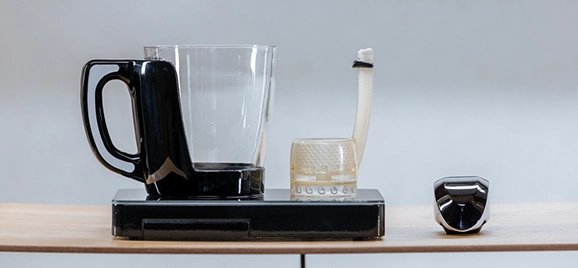
Custom Smart Beverage Pourer

EnCata supported a startup as an engineering contractor, developing a smart beverage pourer for bars that meters each pour in real time, connects to POS and mobile apps, and enables NFC payments — from PoC to MVP. All IP belongs to the customer.

up to 50%

increase in bar revenue

250% faster payments

via credit cards and NFC-enabled transactions

View Project
Consumer & wearable

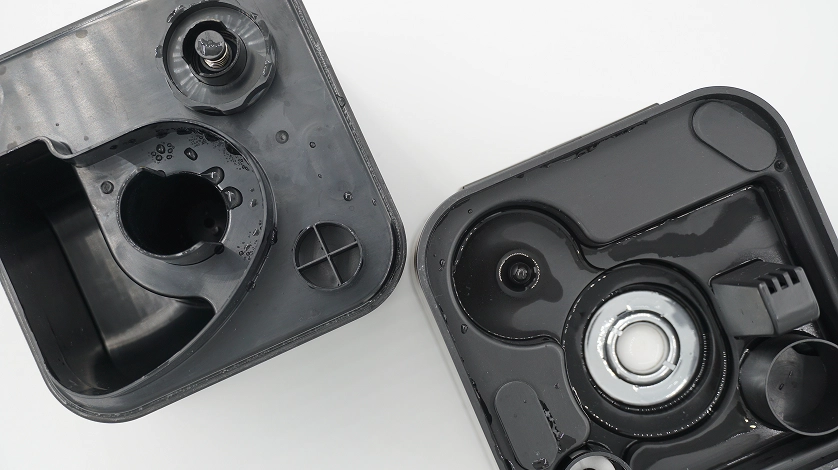
Custom IoT 5-in-1 Air Purifier

EnCata developed a multifunctional IoT device that purifies, humidifies, ionizes, and monitors indoor air. We supported a consumer startup as an engineering contractor — from concept and embedded software to pilot production. All IP belongs to the customer.

2

successful crowdfunding campaigns

5-in-1

features delivered in one device, replacing multiple single-purpose products

View Project
Vehicles

Custom IP66 Enclosure Design

EnCata developed a custom IP66-rated enclosure for automotive electronics, tailored to a specific PCB. We handled industrial design, DFM, in-house mold fabrication, pilot production, and assembly, delivering full-cycle development under one roof.

2 moulds

designed and manufactured for pilot production

10 prototypes

built and tested during the DVT phase

View Project
Smart city

Self-managed cold electronic storage for digital assets custody

EnCata developed a custom electronic storage vault for a fintech customer, integrating over 8,194 Spark™ wallets. The vault enables secure storage and blockchain-controlled transactions. We delivered enclosure design, DFM, and a functional prototype.

600 kg

steel prototype with bulletproof glass

8,194

Spark™ hardware wallets incorporated

View Project
Consumer & wearable

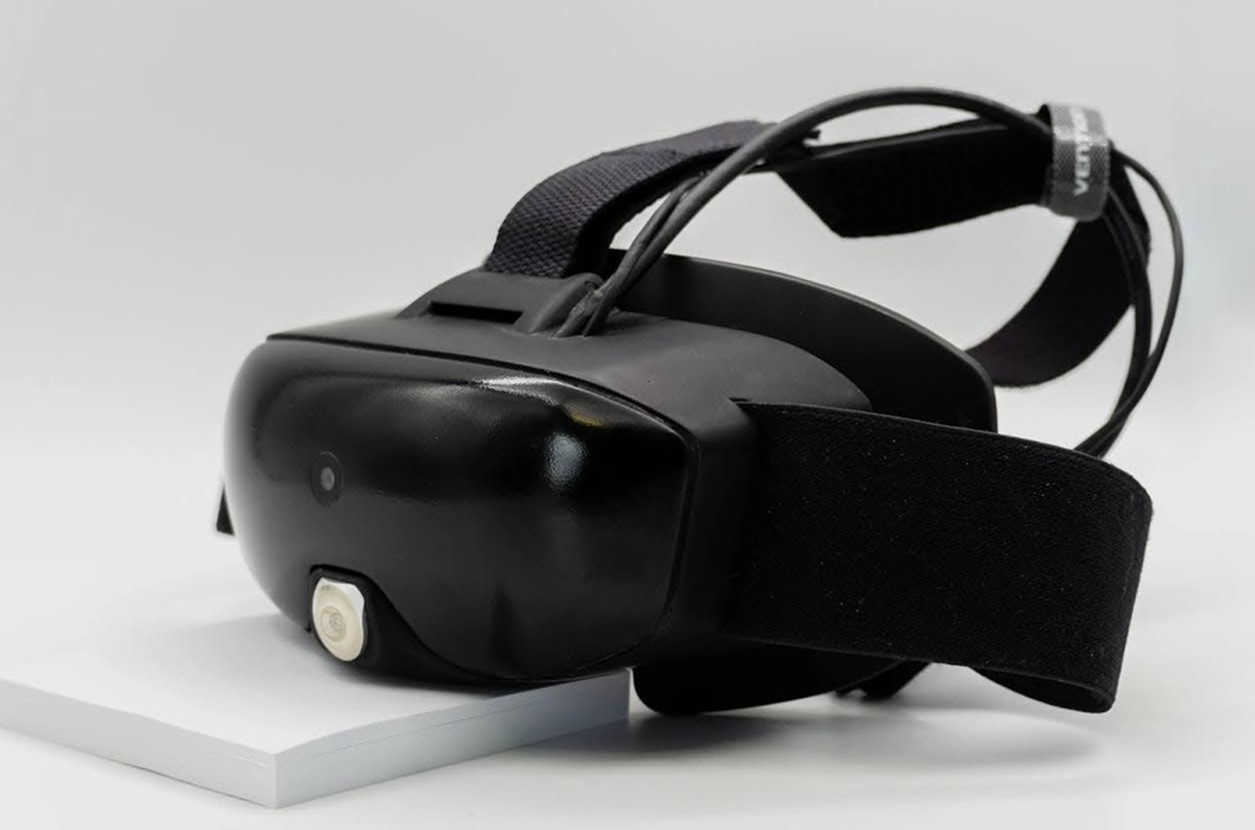
8K VR Headset for Sports

EnCata developed an 8K VR headset for sports training which featured ultra-high resolution, a wide field of view, and compact dimensions. It allowed real-time interaction between players in different places. The prototype was ready for pilot production in just 8 months.

8K

display resolution

90-110°

field of view

View Project
Healthcare

Custom Brain Cooling Device

EnCata developed a dual-circuit brain cooling system for therapeutic use in stroke rehabilitation, neurotrauma, and psychiatric care. The system includes a portable cooling control unit and a head-cooling helmet.

+3°C to +30°C

Skin surface temperature under helmet

160 – 400 W

Cooling capacity

View Project
0
0
Enclosure Design PRIORITIES

How We Design Enclosures That Work in the Real World

Designing an enclosure is not just about shape. It must impress your users, fit your COGS, protect electronics, manage heat, withstand real operating conditions and be ready for manufacturing.

We approach enclosure development as a structured engineering process.

01

Requirements & Constraints

We start by defining all key constraints, including IP requirements, thermal conditions, production targets, and the target market price.

02

Concept & Internal Architecture

At this stage, we develop the internal structure of the enclosure. This includes component placement, fixation strategy, and sealing approach, ensuring that all elements can work together without conflicts.

03

Mechanical Engineering & Computer Simulations

We develop the enclosure 3D model based on computer modeling, where the modeling type depends on the targeted parameters. The final design is aligned with the selected production technology from the start.

04

Validation in Lab Environment

We verify thermal performance and mechanical behavior on a testing enclosure sample. This includes checking heat dissipation and ensuring the enclosure can withstand required conditions, including drop scenarios when needed.

05

Prototyping & Testing

We produce prototypes and test them in real conditions. This includes assembly validation, thermal testing under load, and practical checks that confirm the design works in actual use.

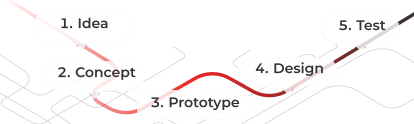
Product development life cycle

1

Discovery

Initial research phase that defines the problem the product will solve and how it will create value. At this stage, the team assesses current conditions — whether building from scratch or improving an existing system — sets the scope of work, and identifies risks or bottlenecks. The outcome is a validated concept, with impractical ideas discarded and a plan for addressing issues before and after launch.

2

Feasibility study

At this stage, we move from ideas to validated decisionsWe define a feasible product architecture, compare implementation options, and verify critical assumptions both technically and economically

3

POC

Tangible demonstration that an idea or concept is technically feasible. At this stage, The team relies on components and materials that are simple, readily available, and often temporary, such as basic breadboards, hobby-grade motors. The goal is to test key hypotheses, using minimal resources, and keep attention on the core objective.

Learn more
4

Prototype

Preliminary model of a future device that already performs its primary function. At this stage, the team employs more reliable and efficient components (e.g., advanced microcontrollers, high-quality motors, precision drive mechanisms). Unlike a PoC, a prototype typically has an enclosure, though it may not yet be finalized.

5

MVP

Functional prototype developed on the basis of engineering calculations, with an optimized BOM, custom-designed electronics, and uniquely engineered mechanical parts. It is intended for field or laboratory testing.

6

Pilot

Limited-scale production and deployment of the finished product to validate it under real operating conditions. At this stage, the team gathers user feedback, monitors performance in the field, and identifies any issues that only appear in day-to-day use. Insights from the pilot phase guide final adjustments before mass production.

Want to develop a custom solution?

Our team is eager to discuss how we can assist you and answer any questions you may have. Don't hesitate to reach out!

Book a call

The entire product journey under one roof

We help companies design, engineer, and prototype physical systems under one roof. No need to coordinate with multiple teams. From research to working prototypes ready for validation and further development, we provide a smooth path to a market‑ready solution.

Competitive prices

Our prices are far lower than those of a typical US engineering firm.

Your IP stays yours

NDA by default. Full IP transfer.

Work globally, ship globally

We'll get a device to you regardless of where you are.

Expert Insight

We Design Enclosures for Real-World Products

An enclosure must meet technical requirements, support usability, and align with production and cost constraints.
 To achieve this, we focus on:

Mounting requirements

Your device often operates in unstable environments, requiring proper electronics mounting, and we provide it.

Cost per unit

You see how material and manufacturing choices impact unit cost, so you can avoid expensive mistakes early.

Electronics

For an enclosure that accommodates antennas, we recommend the optimal material mix to match your desired design.

Device weight

Weight is a critical competitive advantage. We consider it when designing enclosure. If the enclosure alone isn't enough, we also reduce electronics weight.

Enclosure Design WORKFLOW

From Requirements To Production-Ready Enclosure

A structured engineering process that ensures the enclosure works in real conditions and is ready for manufacturing.

Typical timeline
1–10 Weeks
Depends on complexity and testing scope
1
1 - 2 weeks

Requirements & constraints

We define how the enclosure must perform in real conditions, including thermal loads, protection level (IP and IK), and internal constraints.

Key Deliverables:
  • Defined requirements
  • Initial internal layout assumptions
  • Constraints for materials and production
2
1 - 3 weeks

CAD engineering

We develop enclosure geometry, internal structure, and interfaces, aligned with manufacturing constraints and product requirements.

Key Deliverables:
  • 3D models & assemblies
  • Internal layout design
  • Engineering calculations
3
1 - 3 weeks

Prototyping & testing

We produce prototypes and validate the design through real testing, including thermal performance and assembly verification.

Key Deliverables:
  • Manufactured prototypes
  • Validation report
  • Identified issues and design iterations
4
1 - 2 weeks

Production readiness

We refine the enclosure based on test results and prepare it for manufacturing and further validation if required.

Key Deliverables:
  • Updated production-ready design
  • Documentation for manufacturing
Get your project timeline
Free estimation based on your requirements
Industries

We Design Across Various Industries

Deep domain understanding increases the success rate of your product.

Consumer & wearable

Consumer & wearable

96
projects delivered

Our team specializes in full-cycle consumer electronics and wearables development and manufacturing. Explore the page to see relevant project examples.

See how we deliver
IIoT & automation

Industrial IoT (IIoT) and Automation Hardware Solutions

15
projects delivered

EnCata will automate your production facility or warehouse with sensors, actuators, and edge computing, providing real-time data processing and efficiency.

See how we deliver
Industrial equipment & tools

Custom Industrial Equipment & Tools

243
projects delivered

Can’t find the right equipment? Discover how EnCata’s custom-built solutions tackle your unique challenges and enhance your production efficiency.

See how we deliver
Analytical & lab equipment

New Analytical & Laboratory Equipment Development

12
projects delivered

Explore EnCata’s custom solutions for analytical and lab equipment. Discover our precision design and development services—click to enhance your lab today!

See how we deliver
Agriculture

Custom Agricultural Hardware Solutions

8
projects delivered

EnCata helps bring your new tech in agriculture to life, including precision agriculture and robotic farming, turning your innovative ideas into reality.

See how we deliver
Green tech

Green Tech

projects delivered

This page is still under development. If you're interested in our experience in this field, please fill out the contact form and we’ll get back to you.

See how we deliver
Healthcare

Healthcare

23
projects delivered

Expertly developed, tested, and manufactured devices ready for market entry. We guide your product through all stages to market. Go test our expertise!

See how we deliver
Robotics

Robotics Solutions for Cutting-Edge Automation

6
projects delivered

Custom robotics solutions for automation—robotic arms, AGVs, and more. Contact us to develop tailored robotics systems for your business needs.

See how we deliver
Smart city

Smart City

projects delivered

This page is still under development. If you're interested in our experience in this field, please fill out the contact form and we’ll get back to you.

See how we deliver
Food tech

Custom Hardware Solutions for Food and Drinks

6
projects delivered

We develop custom solutions for food and drinks: from dosing and filling systems to quality control, and automated cooking systems. Contact us today!

See how we deliver
Vehicles

Vehicles

projects delivered

This page is still under development. If you're interested in our experience in this field, please fill out the contact form and we’ll get back to you.

See how we deliver
Other

Other

projects delivered

This page is still under development. If you're interested in our experience in this field, please fill out the contact form and we’ll get back to you.

See how we deliver
Expert Insight

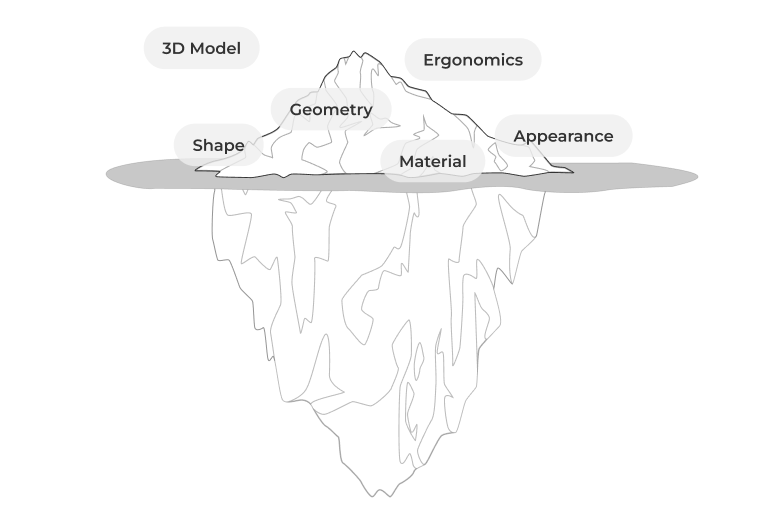
Enclosure Design Is More Than Just a CAD Model

A custom enclosure may seem like an unnecessary expense, especially if the device does not require complex geometry or materials.

In practice, it includes engineering calculations, validation, testing of first samples, and further refinement to ensure the product works as intended.

Thermal validation

Electronics are tested inside the enclosure under maximum load.

Assembly verification

Wiring, component placement, and accessibility are validated beyond CAD models.

Prototype testing and iteration

3D-printed prototypes are tested as a worst-case scenario. Based on results, the design is refined.

PRODUCT MATURITY

Prototype Maturity Stages

From early concept validation to production-ready enclosure design. Prototypes that answer the right questions

Concept Prototype

Is it feasible? Is there enough space inside?
Basic form and spatial validation prototype.

1 week
Production Method
FDM / SLA 3D printing
Materials
PLA, standard resin
Design State
Simplified geometry without tolerances or fastening details
Engineering Focus
PCB fit, internal layout, overall geometry
trl
4

Functional Prototype

Does the enclosure provide the necessary UX/UI? Functional prototype with initial assembly validation.

1 – 2 weeks
Production Method
SLA / SLS / Silicone molding
Materials
ABS-like resins, polycarbonate substitutes
Design State
Includes wall thickness, openings, and basic fastening points
Engineering Focus
Shape and appearance, component fixation, BOM freeze
trl
5

Validation Prototype

Does the product meet all requirements?
Prototype for engineering validation.

2 – 3 weeks
Production Method
Silicone molding / CNC machining / Vacuum casting
Materials
ABS, polycarbonate, aluminum, resins
Design State
Production-oriented design with tolerances, joints, and sealing features
Engineering Focus
Heat dissipation, assembly process, 
IP rating
trl
6

Pre-Production Design

Is it efficient at scale?
Production-ready enclosure for pilot manufacturing.

2 – 3 weeks
Production Method
Injection molding, precision CNC
Materials
PC, ABS, engineering plastics
Design State
Optimized for molding geometry with fastening systems and surface finishes
Engineering Focus
Repeatability, final assembly workflow, pilot production readiness
trl
7
Expert Insight

Read to Understand How We Think

We share our approach to product development, engineering decisions, and real project experience. No marketing noise — just practical insights and structured thinking.

Thank you! Your submission has been received!
Oops! Something went wrong while submitting the form.

Understanding the nuances of PoC, Prototype, and MVP

How to Handle Tough Deadlines in New Product Development

Quality Control Checklist for a Mechanical Device

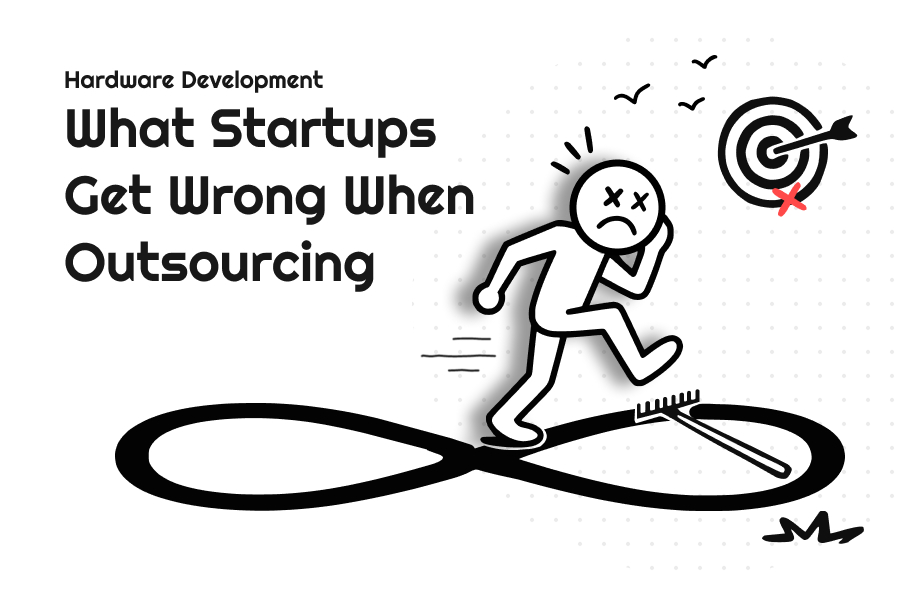
Minimalist black-and-white line illustration of a frustrated startup founder stepping on a rake while aiming at a target, symbolizing common mistakes in hardware outsourcing.

What Startups Get Wrong When Outsourcing Hardware Development

FAQs

Frequently Asked Questions

Have a question that needs a human to answer? No problem.

Speak to our Sales Team now
When do I need a custom enclosure instead of a standard one?
What does enclosure design include?
How do you validate enclosure design?
What materials are used for enclosure development?
What manufacturing methods are used for enclosures?
How long does enclosure design take?
How do you handle heat dissipation in enclosures?
Can you work with an existing industrial design?
How do you ensure the enclosure is manufacturable?
What testing is required for enclosures?
What happens if problems are found during testing?